Upgrading an IT Service Management Platform
SERVICE DESIGN
UX/UI
Project Overview
I tackled a critical challenge for SecurityHQ's legacy IT Service Management platform. The 10 year old service was in need of a revamp, with a specific focus on how customers create and submit requests to make the process more seamless and efficient. Whether they're wanting to:
Integrate a new asset
Initiate a scan
Request an audit or data
Update security configurations
… The list goes on. Service Center is where they wanted the customers to administer and track these sort of requests.
The Challenge
Existing customer UX to create request
Research & Discovery
I began with an in-depth contextual inquiry to understand the ecosystem of users and their needs. This revealed three key stakeholder groups:
Customers - Security service users needing to submit and track requests without technical expertise
Service Assurance Team - Frontline staff responsible for triaging and routing requests
Cybersecurity Consultants - Dedicated professionals assigned to specific customers
What i found in the ticket archives…
67% [3 months] of tickets are created internally.. indicating that our analysts are the ones creating tickets on behalf of the customer and customers are abandoning/giving up.
Over 40% of tickets require clarification from the analyst to customer in comments. In order to better articulate the users problem.. ask better questions. Let’s moved away from a flat category list
Developed our principles…
Before any taxonomy work could begin, I needed to align the team on what "good" actually looked like. I audited three months of ticket archives, ran card sorting sessions with customers, and interviewed SMEs to surface the gap between how analysts thought about requests internally and how customers actually described their problems.
From that research, I distilled a set of principles to guide every taxonomy decision- keeping the customer's voice at the centre, eliminating overlap between categories, and stripping out security jargon so any user could self-serve without a glossary.
Design Process
Restructuring Information Architecture
Created primary problem categories
Developed intuitive sub-categories
Built logical funneling from general concerns to specific issues
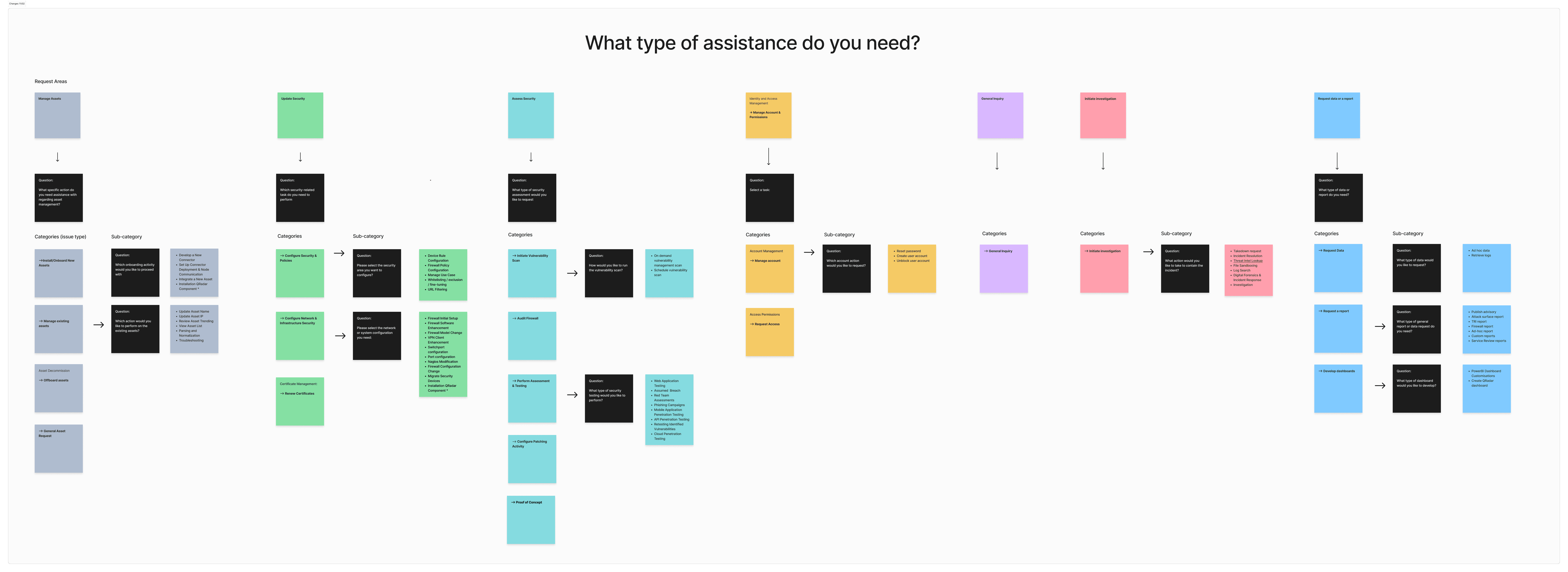
Category Hierarchy Development
Collaborated with internal teams to validate category groupings. I targeted people from sales to SOC analysts, to gauge the level of difficulty.
Randomised sub-categories and had team members organise them. The goal was for them to pair the sub-category with the "correct category"
Iteratively refined until reaching consistent consensus.
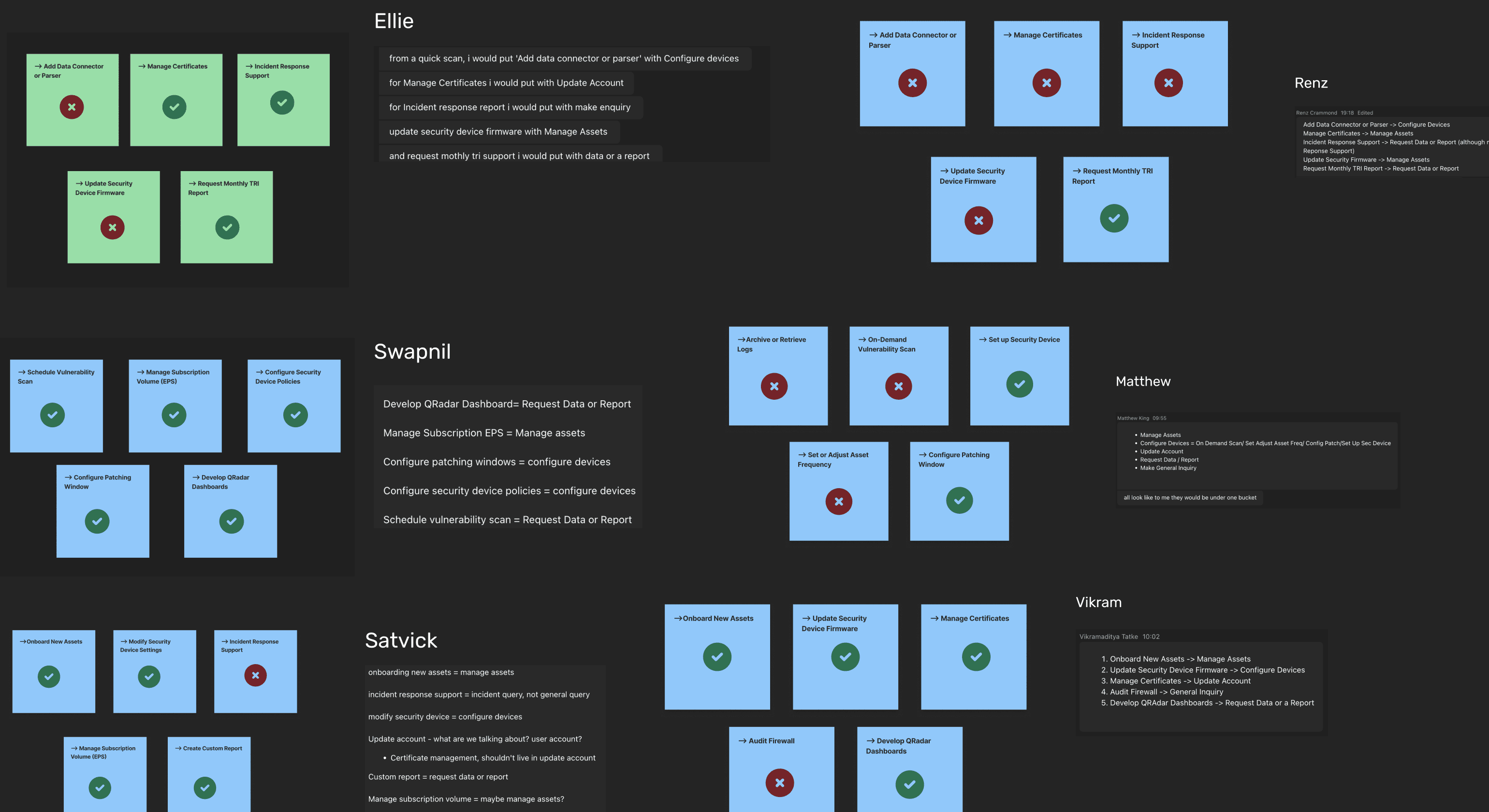
Card Sorting Exercise
User Flow Optimisation
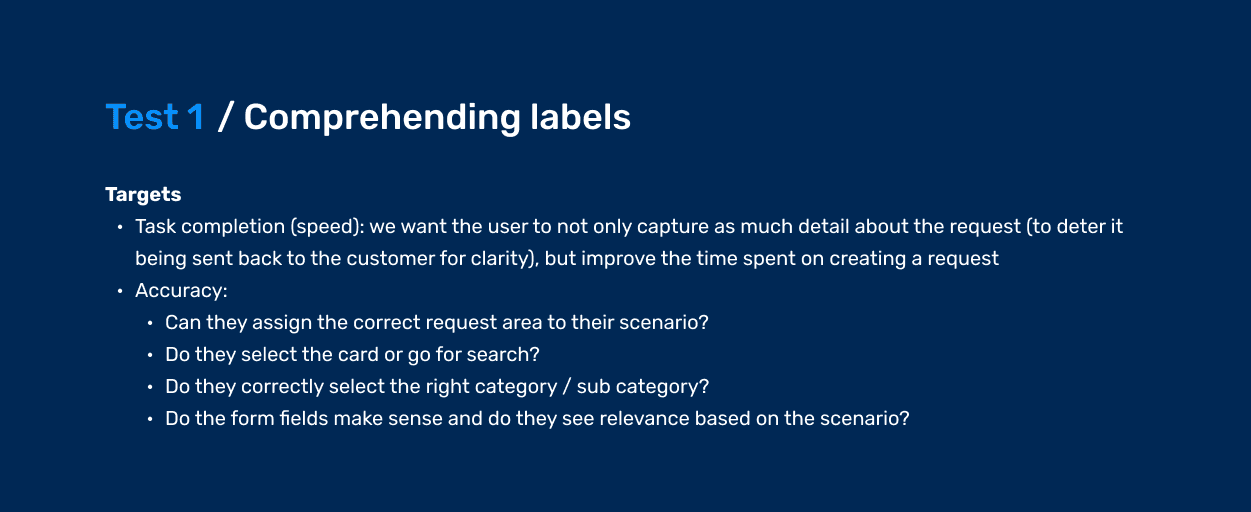
Cognitive Walkthrough Sessions
Research goal: The ability classification to classify a request is way too technical at the moment, we want to screen labels and see which have the highest number of misclassifications
Used archived customer requests as test scenarios
Observed how users navigated category selection
Identified friction points in the submission process
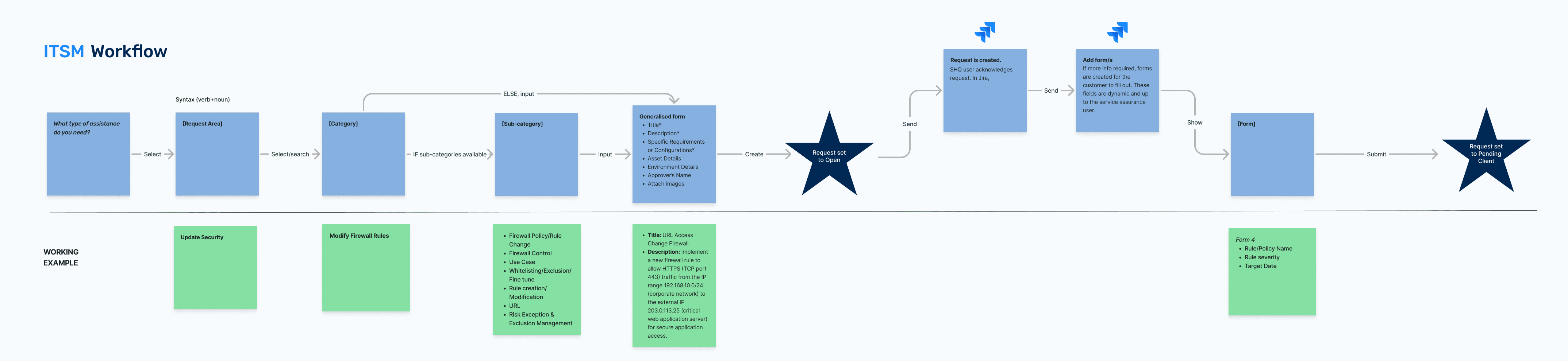
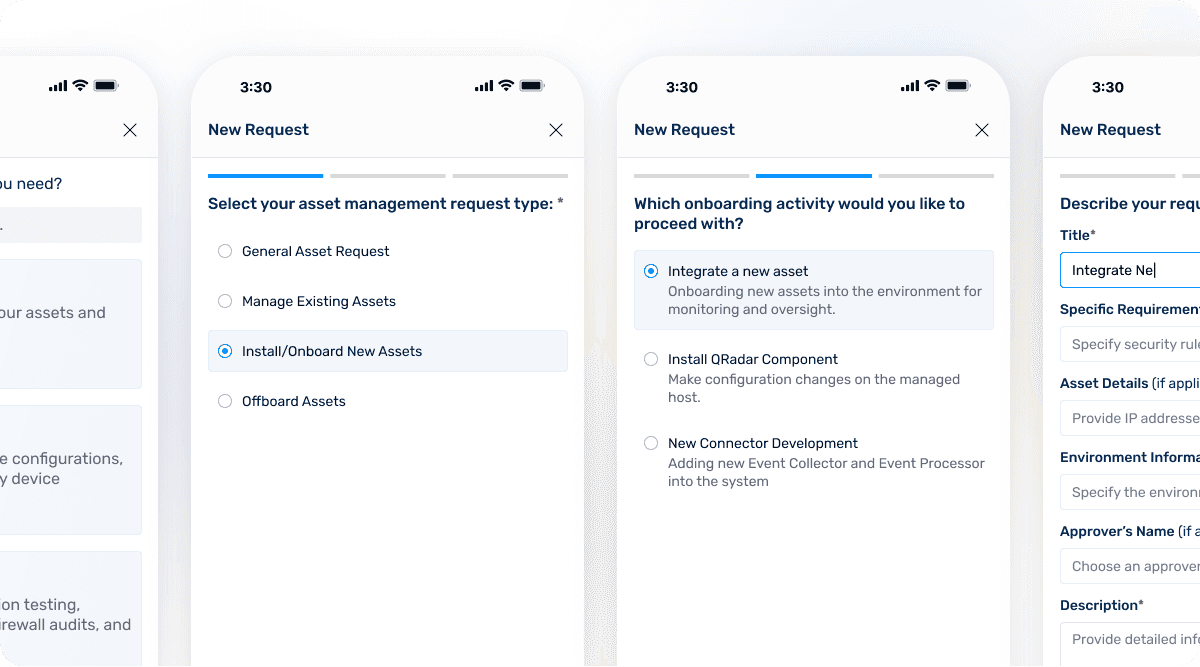
The Redesign
The redesigned featured:
Plain language replacing technical jargon
Progressive disclosure of options to reduce cognitive load
Contextual guidance at each step
Mobile responsive
Clear status indicators for submitted requests
Consistent visual language aligned with new atomic design system
Key Learnings
This project was pivotal in shaping my expertise with AI models. You can see how transferrable the principles we established can be to an instruction list for an LLM, and also extend with a chatbot (balancing structured user paths with the flexibility of conversational AI).
We could have repositories for:
Links (knowledge articles)
Prompt libraries (prescribed request areas)
Triage logic (opportunities to branch to a new stream / API. E.g. a query that could trigger a service call with SHQ team)
I also invested a lot of time in the triaging process for our internal users. There were technical limitations faced in the Jira API and the triaging process. I ran tests with our internal team to see how successful they were at triaging these customer requests in Jira. I worked closely with back end engineers to make sure that Jira was displaying requests correctly from two different mediums - the portal or via email.
Impact
10 of 10
beta customers completed their own request, with no analyst stepping in.
8 of 10
chose the right request type, so tickets reached the right queue without re-triage.
Testimonial
I had the pleasure of working with Emily for the last couple years. During that time, she consistently impressed me with her exceptional skills in transforming our product deliverables into a usable and visual framework to rally our stakeholders behind. She excels at translating ambiguous user feedback into an elegant visualized plan. She’s an invaluable asset to any team and I highly recommend her for any role that demands a skilled and dedicated professional in the UI/UX design fields.

Josh Resnick